
Why Delaware Needs More Paths to Stability
Monday, June 1, 2026
When most people think about the housing crisis, they think about rising rent or the challenge of buying a home. But for many Delawareans, the issue runs much deeper. Housing affects health, employment, family stability, and the ability to build a future.
That’s why YWCA Delaware was grateful to meet with Representative Franklin D. Cooke during Housing Day at Legislative Hall. Our Chief Housing & Community Impact Officer, Lisa Forever, LMSW, MSCJ, and Chief Development Officer, Felisha Lawrence, discussed the growing need for a wider range of housing options across Delaware and the policies that could help address the challenge.
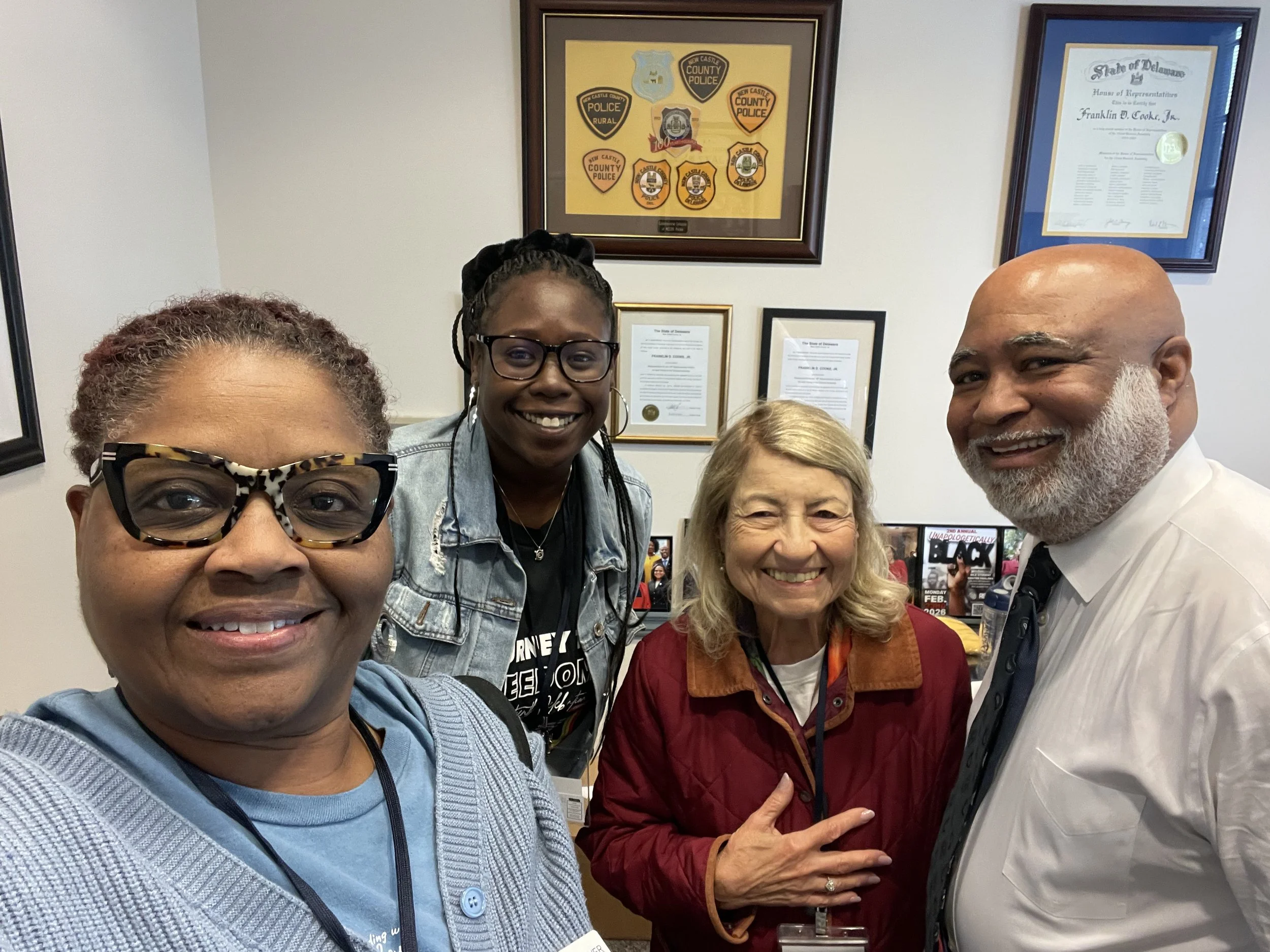
From Left to Right: Chief Housing & Community Impact Officer, Lisa Forever, LMSW, MSCJ (left), Chief Development Officer, Felisha Lawrence (middle), Representative Franklin D. Cooke (right).
The conversation focused on the importance of creating housing opportunities that meet people where they are. That includes affordable rental units, workforce housing, prevention funding that helps families stay housed, and supportive housing for individuals facing additional barriers. Every person’s situation is different, and our housing system must reflect that reality.
The need is clear. According to the Delaware State Housing Authority's housing needs assessment, half of Delaware renters spend more than 30% of their income on housing costs, while 21% of homeowners are also considered cost-burdened. Delaware is currently short nearly 20,000 affordable housing units for lower-income renters statewide. Delaware is also projected to need approximately 45,000 additional housing units by 2030 to keep pace with demand.
For the people we serve, these numbers are not abstract statistics. They are the reason a parent and child remain in shelter longer than necessary. They are why seniors move between temporary living arrangements. They are why working adults with steady jobs still struggle to find housing they can afford.
One proposal to address this challenge is Senate Bill 23, known as the Housing for Every Delawarean Act. The legislation would require counties and larger municipalities to develop affordable housing plans, increase opportunities for a broader range of housing types, and streamline approval processes that can delay new housing development. The bill also establishes a goal of helping communities move toward a housing supply where 20% of homes are affordable. The legislation has been released from committee and is currently on the General Assembly's ready list awaiting further consideration.
YWCA Delaware's Director of Community Engagement, Becca Cotto, also provided public comment in support of the legislation, emphasizing the importance of expanding housing options and creating pathways to stability for individuals and families throughout the state.
During our discussion with Representative Cooke, we also talked about a factor that is often overlooked when people discuss homelessness: mental health.
Mental health challenges can affect nearly every aspect of a person's life, including employment, finances, relationships, and daily functioning. When someone struggles to access treatment or ongoing support, maintaining stable housing can become increasingly difficult.
Approximately 26% of adults experiencing unsheltered homelessness nationwide live with a serious mental illness (Kasier Family Foundation). In Delaware, behavioral health providers reported that 13% of individuals entering mental health treatment were unhoused, while 67% of clients receiving opioid response services experienced housing instability in 2023 (Delaware Health and Social Services).
Beginning in the 1950s, the United States gradually shifted away from long-term psychiatric hospitals and toward community-based mental health care. While this transition helped many people receive treatment in less restrictive settings, community housing and support services often did not grow at the same pace, leaving gaps for some individuals living with serious mental illness (Congress.gov).
Today, some individuals leaving psychiatric hospitals or inpatient behavioral health facilities do not have stable housing available at discharge, increasing their risk of housing instability or homelessness.
Without safe and stable housing, maintaining treatment, employment, and long-term recovery can become significantly more difficult. Housing and mental health cannot be addressed separately. Safe, stable housing creates the foundation people need to access care, maintain employment, support their families, and work toward long-term goals.
We appreciate Representative Cooke for taking the time to listen and engage in these important conversations. Addressing Delaware's housing challenges will require partnership, thoughtful policy, and a commitment to serving people with diverse needs.